
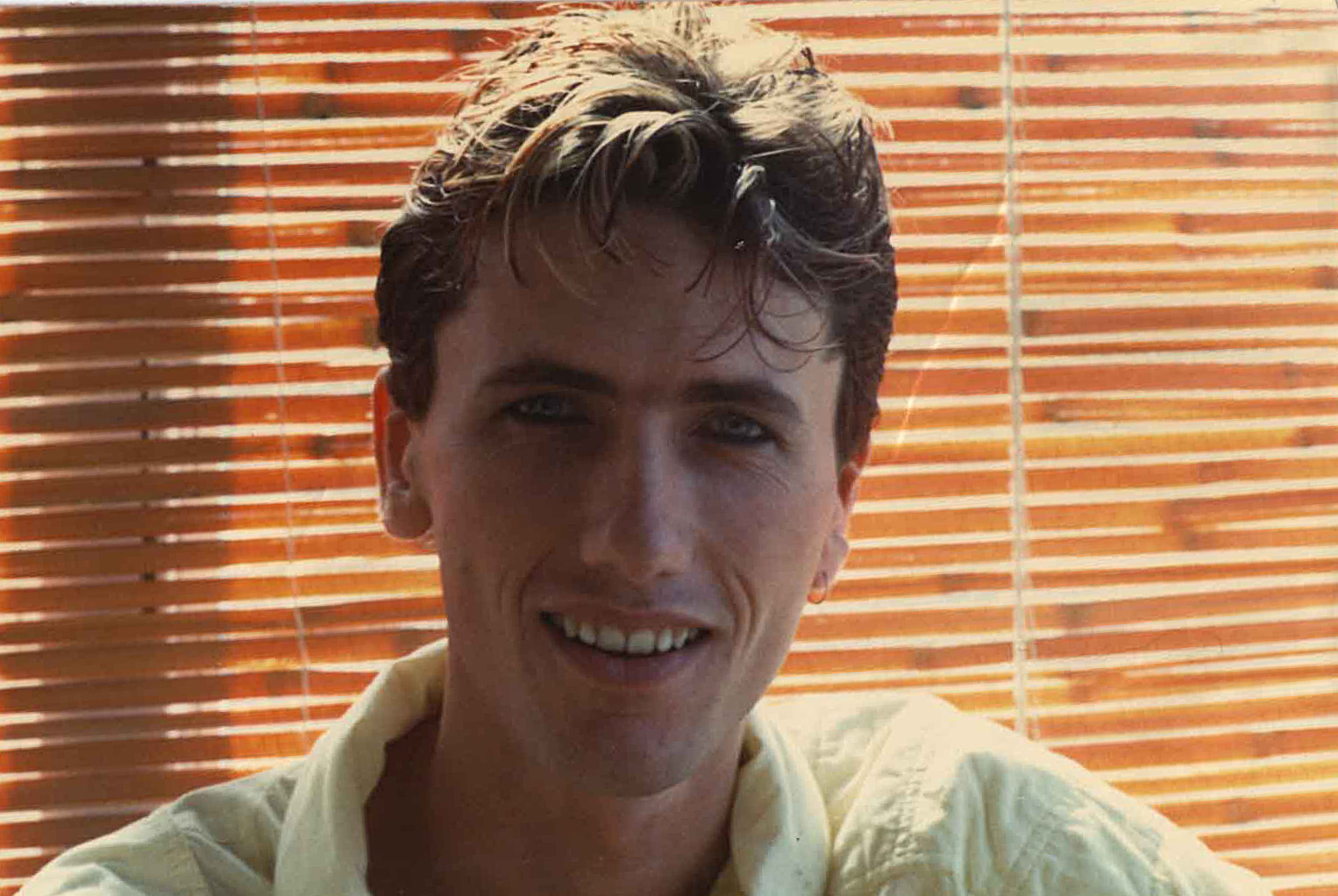
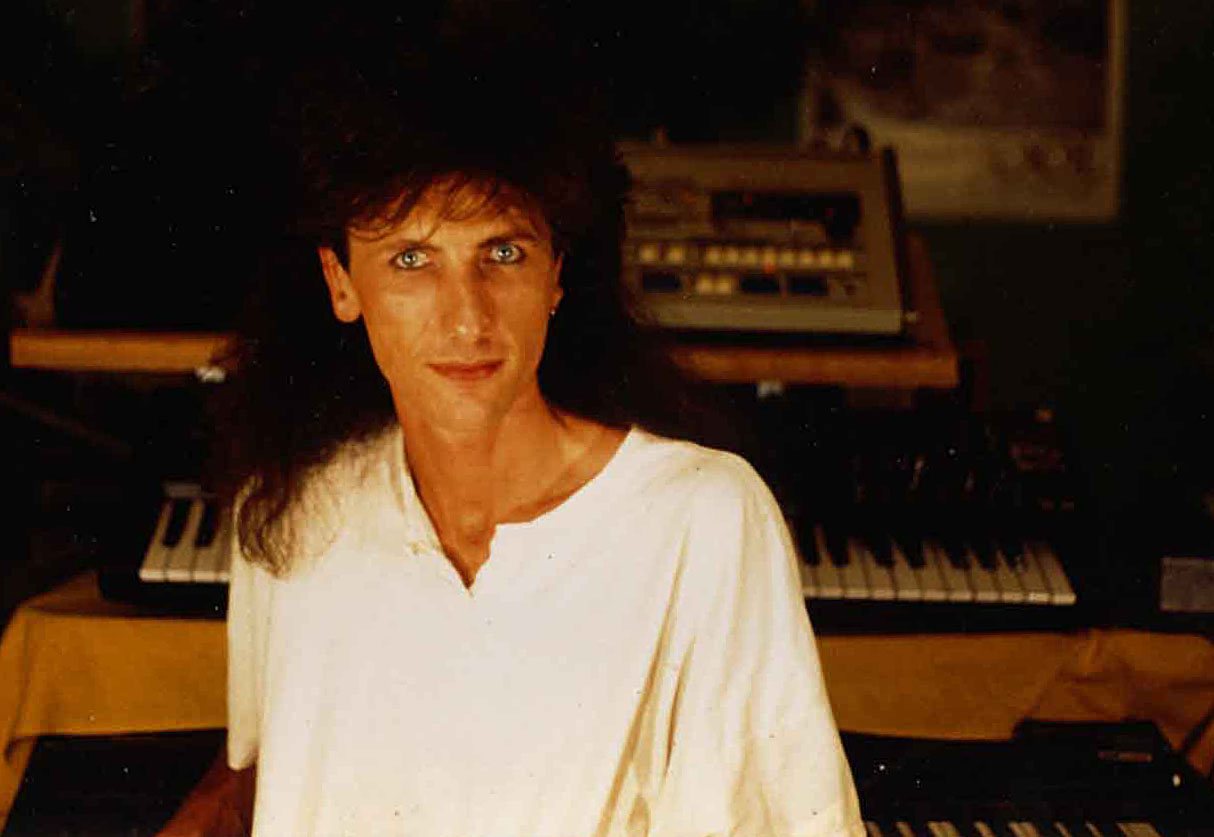
Jay Moxham 1981
The Crazoids project has a history that spans 45 years - from the analogue tape machines of 1980 to the generative AI engines of 2025. You can find more info about the name itself here.
Before establishing his home studio in Willoughby, Sydney, Jay spent years honing his craft recording with friends like David Mills and completing Audio Courses at Wirra Willa Studios. In 1979, determined to break into the industry, Jay booked Rhinoceros Studios when it was still a 4-track facility (later famous as the home of INXS). In a moment of youthful bravado, Jay and his partner Samantha flew to Melbourne and managed to talk their way into Molly Meldrum's house, pretending to be an upcoming label to pitch their tracks sitting casually on his loungeroom floor!
Molly's feedback was tough but constructive - the tracks needed more work. Undeterred, the 4-track masters were taken to Madrigal Studios in North Sydney and transferred to 16-track, where additional vocals and instrumentation were added: Paul Dengate on electric guitar, Jim Marjoram on piano, and Ken Handley on bass.
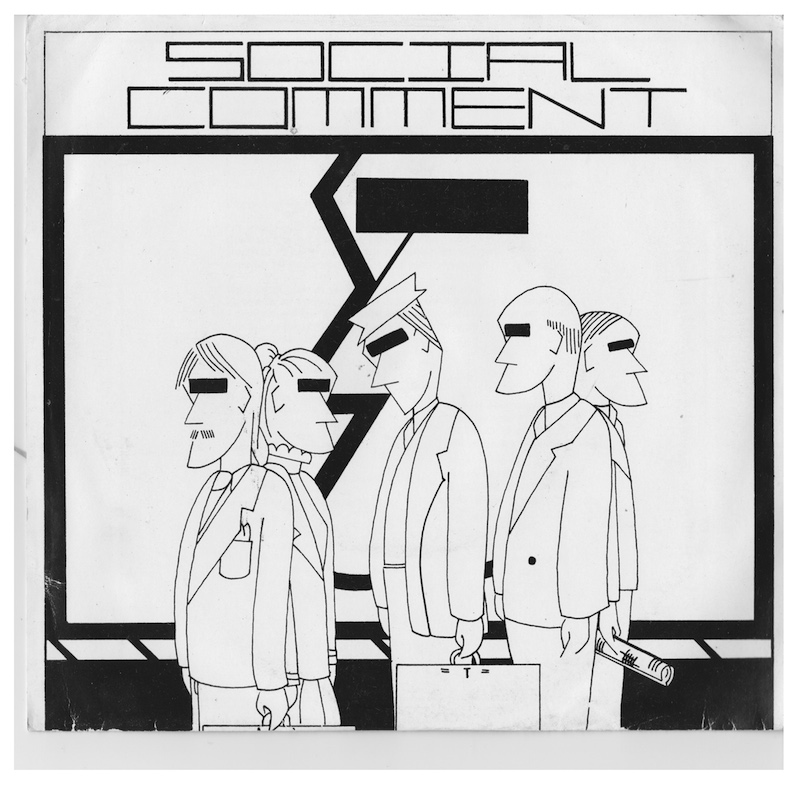
Despite the upgrades, a follow-up meeting with Molly at The Gazebo Hotel didn't yield a deal. This rejection only fueled Jay's independence. He adopted the band name Social Comment, pressed 500 vinyl singles himself, and handled distribution. The track gained traction on the original 2JJ thanks to DJ Pam Swain, though it was controversially banned by 2SM for the lyric "breaking your balls." Explore the full story of that single on the Social Comment Facebook Page.
The Crazoids is the next vehicle after these initial Social Comment songs. These new songs were snapshots of life during the millennial shift - a time when humanity was hurtling toward a Y2K crescendo. The lyrics are filled with fun, humor, and irony.
In the early 80s, Jay wrote and recorded a significant collection of catchy, quirky Pop songs. Despite serious interest from industry insiders, the project was "ahead of its time" - a studio-based concept that didn't fit the live-gig demands of the Australian pub rock era. These songs remained as unreleased demos for decades... until now.
The Blueprint Recordings (1980-1983)
The core of The Crazoids sound was forged in these original sessions. Jay played most instruments - kit drums, DMX drum Machine programming, percussion, guitars, keys, and vocals - handling all engineering and production. Crucial contributions came from collaborators Paul Dengate (guitar/production) and Ken Handley (fretless bass). You can hear the chemistry of this trio on Paul's 'Prehearsals' collection.
Influences & Style
The lyrical message was heavily influenced by the introspective depth of Pink Floyd and The Moody Blues, while the Pop sensibility drew from Elton John, Bowie, Cat Stevens, Duran Duran, Madness, ELO, Elvis Costello, and Peter Gabriel. Locally, Skyhooks were a major inspiration for proving that pop music could be both tongue-in-cheek and serious social commentary.
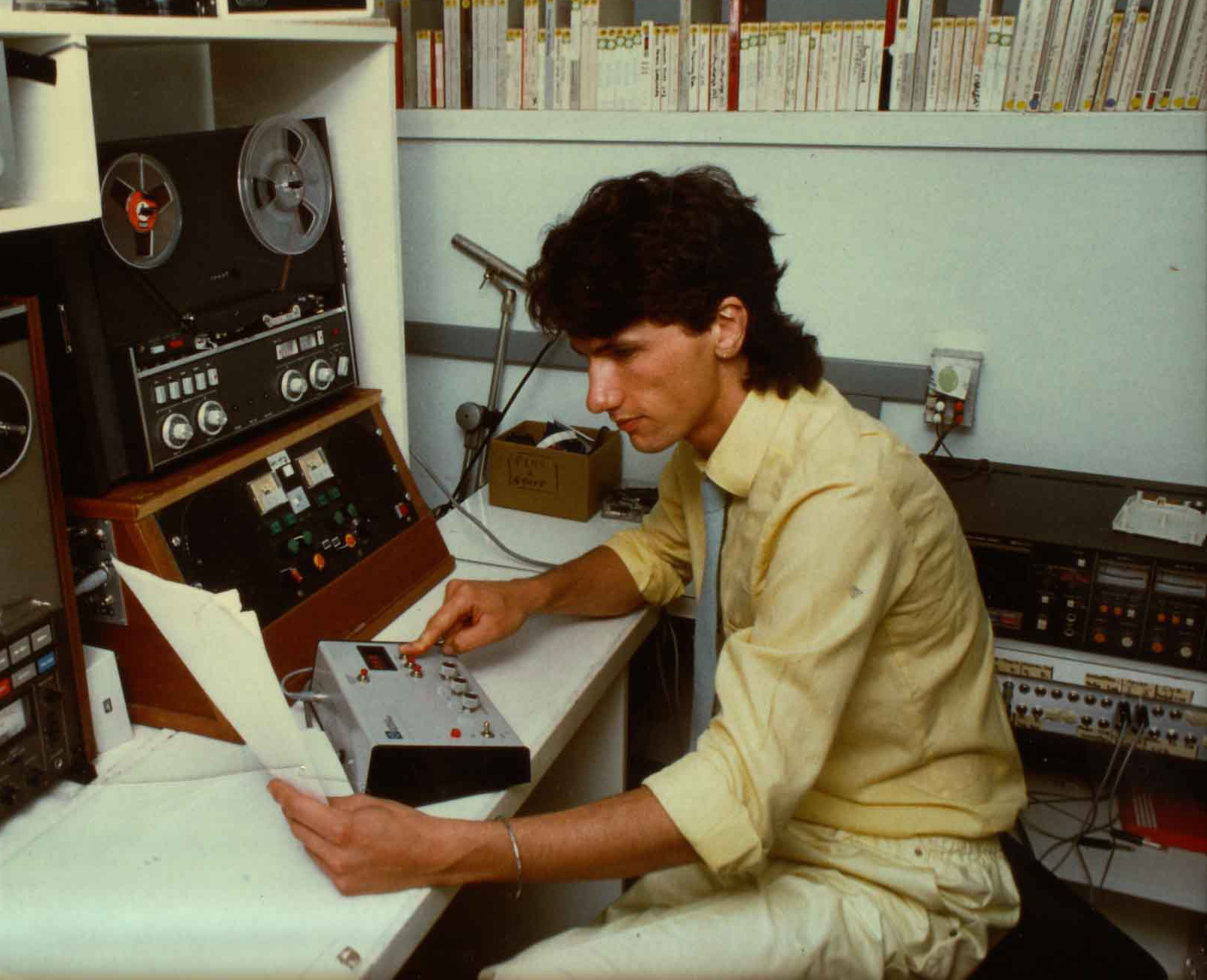
Jay's perspective was also shaped by his day job as an audio technician and producer in an AV office while he built and created in his studio out of hours. That office was the inspiration for songs like (I love) The Office and Attic Dreamer. (The photo on the right captures the last time he ever wore a tie - 1982!)
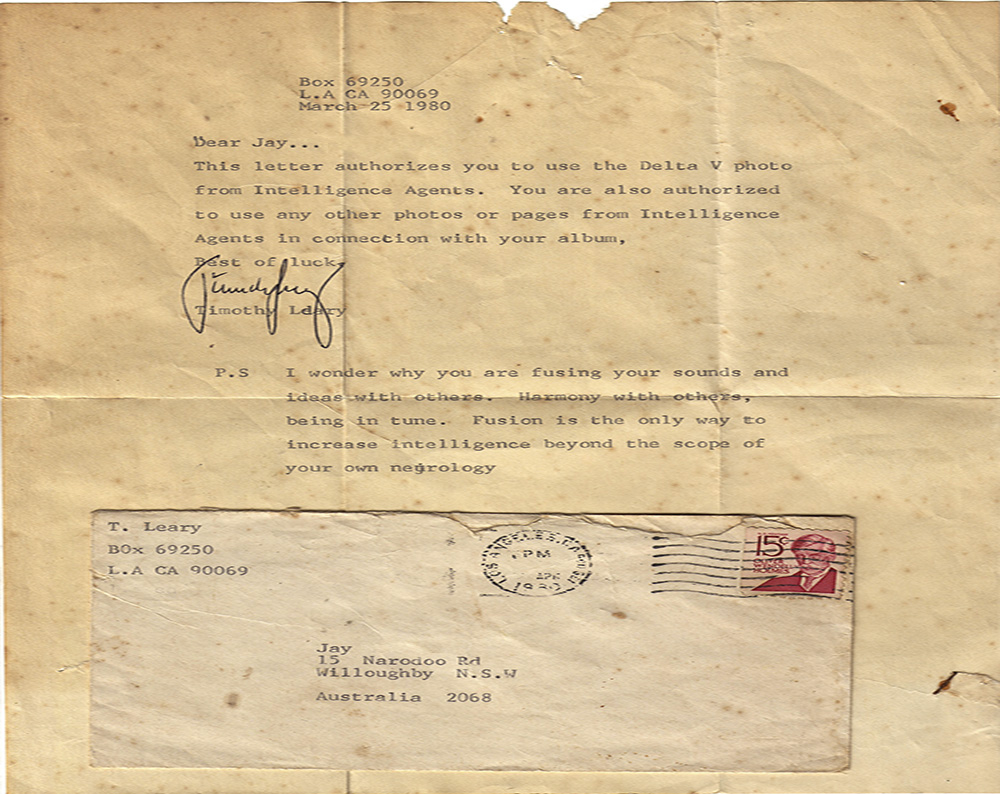
A pivotal influence on Jay's thinking was the book Intelligence Agents by Timothy Leary (24mb PDF download). It radically expanded his worldview as a young adult. Jay actually wrote to Leary requesting permission to quote the book in his songs - and received a personal reply. Leary wrote: "I wonder why you are fusing your sounds and ideas with others. Harmony with others, being in tune. Fusion is the only way to increase intelligence beyond the scope of your own neurology. Best of luck." (Click image to view the letter).
The "Almost" Moments
Between 1980-1983, Jay wrote over 40 songs and sent demos to nearly every record label on the planet. Deals were nearly struck twice - including interest from Air Supply's backers and The Hoodoo Gurus' management - but the industry hesitated because there was no "live band" to tour the music.
This was ironic, given that Jay had signed a management deal with Anthony O'Grady, the founding editor of RAM Magazine. O'Grady famously went on Donnie Sutherland's late-night TV show Sound Unlimited and described Jay as "the best thing since David Bowie and sliced bread!" Despite this high praise and O'Grady's efforts, the Australian industry couldn't quite grasp the concept of a pure "Studio Artist" at the time.
Frustrated that artists like Roger Waters could sell millions discussing social issues while he couldn't get a deal, and seeing international acts like Tears For Fears succeed without being a 'pub band', Jay eventually shelved the project.
The Transition
In 1983, Jay pivoted. He transformed the Willoughby studio into a dedicated meditation space and spent the next decade (1983-1992) pioneering ambient music as the Japetus project. The synthesis skills honed during the pop years were applied to creating vast 'soundspaces' for exploring imagination, inner space and wellbeing.
The Crazoids Reborn (2025)
Now, 45 years later, the original Crazoids demos have been resurrected. Using the 80s recordings as the "source code," Jay has employed modern Suno AI technology to finally realise the full production potential of these songs. What was once a collection of rough demos is now a fully produced catalogue of meaningful pop.
Credits & Acknowledgments
The new 2025 productions on this site were generated using Suno AI, based on the original 1980s compositions and arrangements performed by:
Jay Moxham - Songwriting, Arrangement, Production, Vocals, Instruments.
Paul Dengate - Original Guitars, Bass, Backing Vocals, Production Assistance.
Ken Handley - Original Fretless Bass.
Special thanks for support in the 80s:
Anthony O'Grady R.I.P. - For the belief, management, and the "Bowie/Sliced Bread" quote.
Michael McMartin R.I.P. - Manager of The Hoodoo Gurus for the encouragement.
Bob Aird - From Rondor Music for giving the songs serious consideration.